

Strong, But Not Too Much
Lisa Gutfleisch on How Strength is Celebrated in Women, Until it Becomes Visible

What if one of the first lessons teenage athletes internalise while growing up in sport is: be strong, but not too much?
To build muscles, push limits and train hard, while still making sure you remain within the version of femininity the world feels comfortable with.
That contradiction sits in the background of many women athletes’ careers, shaping how they move through puberty, how they relate to nutrition and recovery, how much space they feel allowed to take up in their own bodies, and how they learn to speak to coaches and themselves.
For this edition of Inside The Changing Room, we spoke with Lisa Gutfleisch: German rower, winner of the World Cup Series, European Silver Medalist and World Bronze Medalist. But also an elite athlete whose relationship with strength has been shaped as much by discipline and ambition as by the quieter work of listening to her body’s signals.
Lisa describes herself as passionate, solution-oriented and deeply sensitive, qualities that show up both in how she trains and in how she moves through the world. That sensitivity, she reflects, became one of her greatest strengths: helping her stay closely attuned to her body, her teammates and the people guiding her through sport.
Our conversation moved through body image, nutrition, recovery, coaching and the tension between what performance asks of you and what culture still rewards. We talked about building strength while growing up under constant scrutiny, learning to recognise the difference between discipline and self-neglect, and why empathy in sport is often misunderstood as weakness, when in reality it can be one of the foundations for optimal performance.
Lisa’s story is not built around one defining turning point, but one of gradual recalibration: learning to take up space without apology, reconnecting with what her body was asking for, and realising that strength and femininity were never opposites to begin with.
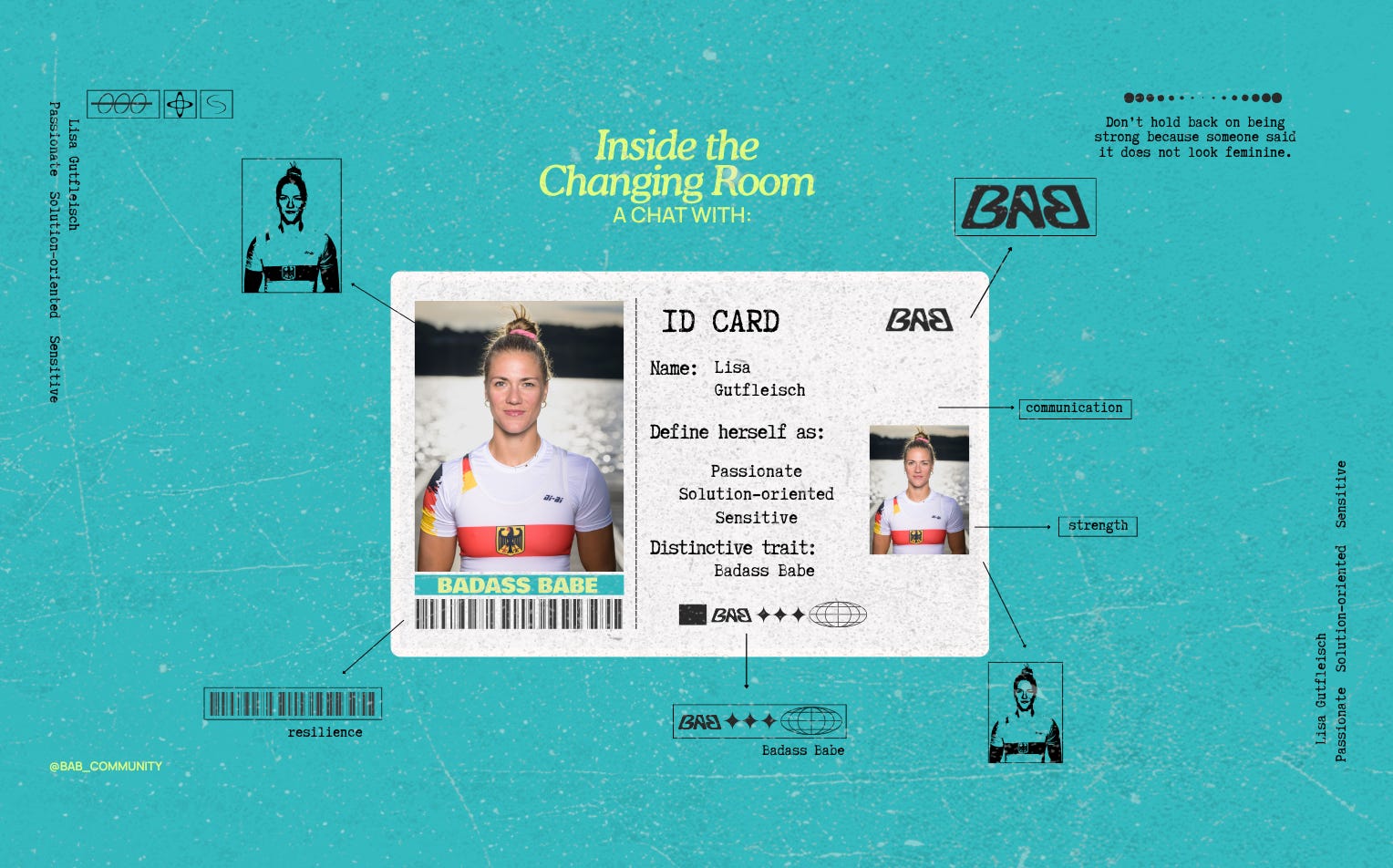
For several athletes like German rower Lisa Gutfleisch, strength has always come with conditions.
Lisa describes herself as a “passionate, solution-focused, and sensitive person.”
Her mum, also a former athlete, would add over-thinker. And Lisa laughs when she says it, because she knows that’s true but that in it also lays her edge: the sensitivity that sends her into her head is the same one that keeps her so deeply tuned into her body, her teammates, and the relationships she has with her coaches.
That attunement didn’t arrive with age alone. It was forged in the gap between what people told her she should be and what she felt she truly needed to become: a successful rower, a supportive teammate, and the empathetic human being we had the pleasure of meeting.
On the one hand, coaches encourage you to gain muscles to maximise your athletic potential. On the other hand, society, and often even your own family, scrutinises that same body to prevent it from getting “too big,” to make sure “you don’t end up looking like a man.”
For years, Lisa worked relentlessly to become an elite rower, while subconsciously keeping her body within the limits society deemed acceptable for a girl to fit in. Chasing strength, while keeping her femininity under control.
It is in that contradiction that a deeper systemic gap known as the female athlete paradox emerges: the distance between what female athletes biologically and emotionally need to thrive, and what society pressures them to look like. That gap is where many girls in sports learn to disconnect from themselves and may hand over their health and wellbeing, in exchange for acceptance.
Female athletes are celebrated for strength until that strength takes up visible space. They are told to push their limits and give more, only to be criticised for their ambition as “arrogant” and “reckless”. They are expected to perform in systems built around what men’s athletes need, but with half (or less!) the resources required to do so. And all this while being expected to shrink themselves inside a narrow idea of femininity, while sports and medical research continue to neglect their bodies.
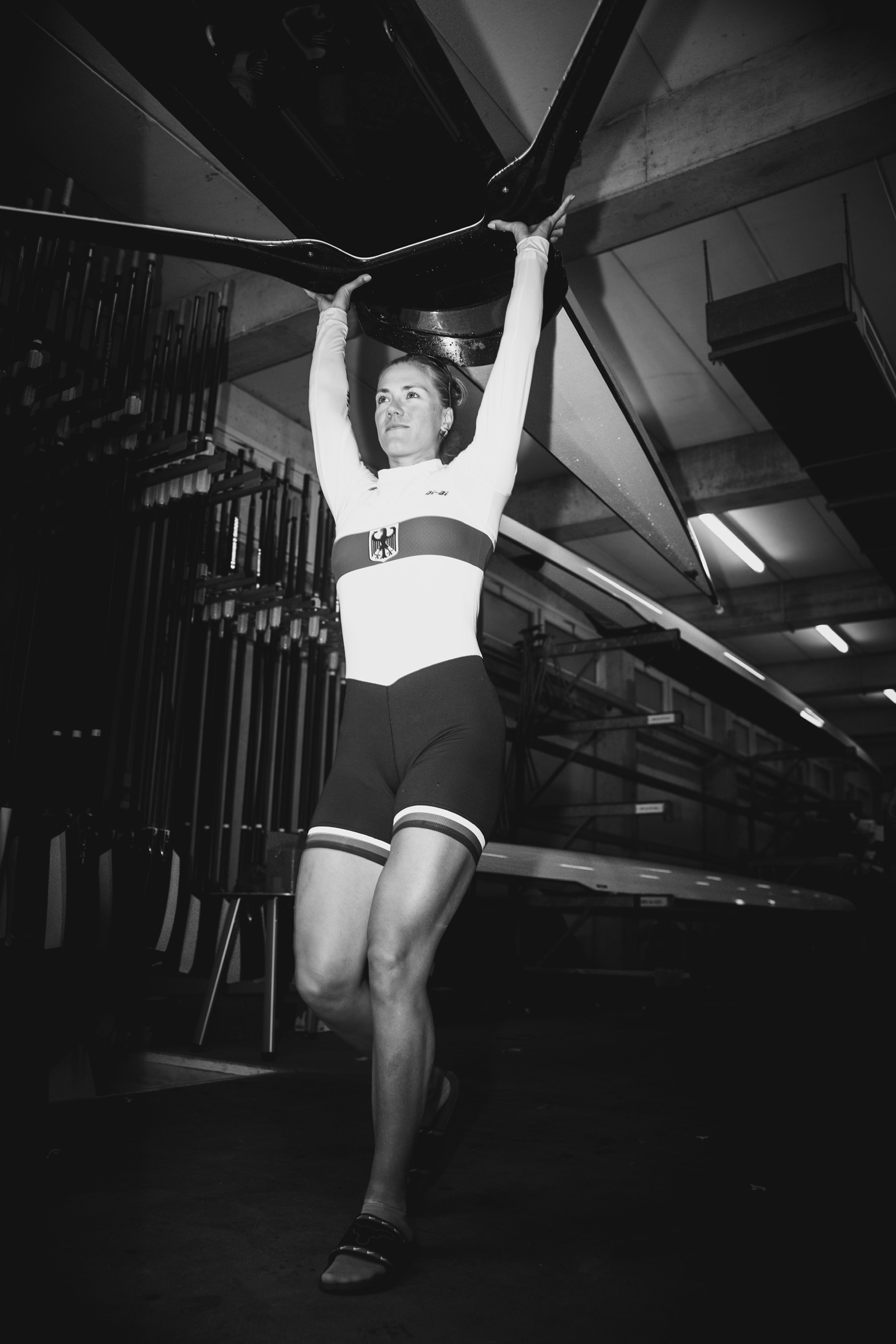
It was only after finding herself again, through the support of her boyfriend, a new coach and trusted teammates, that Lisa managed to step fully into her strength and recognise the hidden pressures that had been limiting her performance while growing up.
This is how she stepped into her strength.
A World Medalist, Lisa has spent years training with discipline through one of the most demanding endurance sports in the world: rowing. But it was only after graduating from University of Texas and returning to Germany, that she managed to close the distance between what her body needed to thrive and what she had been taught a woman’s body was allowed to look like.
“I hadn’t realised until recently how much I had been conditioned to see strength and building muscles as the opposite of feminine,” she says.
When talking about body image, Lisa starts with school and with how cruel kids can be. Like many girls navigating puberty, she began observing herself through an outside lens, repeatedly checking whether her body was becoming “too much.”
That scrutiny was intensified by comments from people close to her:
“You’re lucky you don’t look like a man,” and “You’re already big enough. Don’t overdo it.”
Even when those words came from a place of love - intended to protect her from a society that rewards thinness over strength - they reinforced the tension between building muscles and constantly keeping herself in check, making sure she did not “get too big.” As she candidly shared: “I always liked that touch of definition my muscles had, but only as long as they did not make me look “too big.”
Lisa’s ambition was clear: she wanted to become an elite athlete, race at the highest level, and win titles. For years she tried to gain weight to support her performance, and struggled with it. The physical challenge was real, but the psychological one was harder.
“My metabolism is really fast and I really had to focus hard on increasing calories,” she shares. “And food stopped feeling joyful. It felt like medicine.”
At one point she had to set alarms every three hours to remind herself to eat so she would not faint. Her coaches were clear: to excel she needed more strength, and to build that strength she needed to fuel more.
Determined to make it work, Lisa went to the team nutritionist, whose advice was simple: just eat more and add more fat.
Looking back, Lisa realises she was never given the practical guidance she actually needed, and that she misunderstood that vague advice as something inappropriate for an athlete. No one really explained how much she was supposed to eat as a young female athlete in full development, with the guidance being always around standardised “healthy plate” suggestions. No one taught her that fats do not equal ultraprocessed “bad” food, and that women’s bodies need them alongside carbohydrates and protein as part of proper fueling and recovery.
When we zoom out, the picture becomes even clearer.
Young athletes are often left balancing school, training, homework, recovery and social life all at once. Without education and without practical support, nutrition stops being a tool and becomes another pressure to manage. It is no wonder it becomes exhausting, and eventually mentally overwhelming, to navigate performance, studies and relationships with only vague instructions. Even more so, when you are trying to thrive within systems that were built around biologically- different bodies from your own, and being expected to figure it all out alone.
Lisa’s experience shows how a lack of sufficient resources can have direct consequences for athletes’ health, wellbeing and development. Without consistent access to tailored nutrition guidance, structured post-training fuelling, and recovery plans based on their physiology, female athletes are more likely to rely on individual effort rather than institutional support.
To perform at their best, on and off the training ground, young athletes need fuel and recovery. They need the mental space to grow stronger. They need education around puberty and hormones, and systems that understand health as an integral part of performance, rather than a threat to it. Ultimately, they need visibility, resources, and support tailored to their physiology and hormonal lifestage.
Lisa eventually found more stability after finishing school and returning home, where external pressures eased and she finally had the space to recover and rebuild. In fact, the lower stress and the greater time to recover were the starting point for her to tackle underfueling. Sharing how simply sitting on the couch and slowing down helped her regain the strength she had been chasing in the US, Lisa smiles and credits something beautifully ordinary: cooking with her boyfriend, learning from him how to prepare a reliable meal, and rediscovering food as something she could enjoy again.
“Before I realised it,” she says, “my mind accepted that I don’t have to fear taking up space and grow stronger in my body, because stronger doesn’t mean less feminine.”
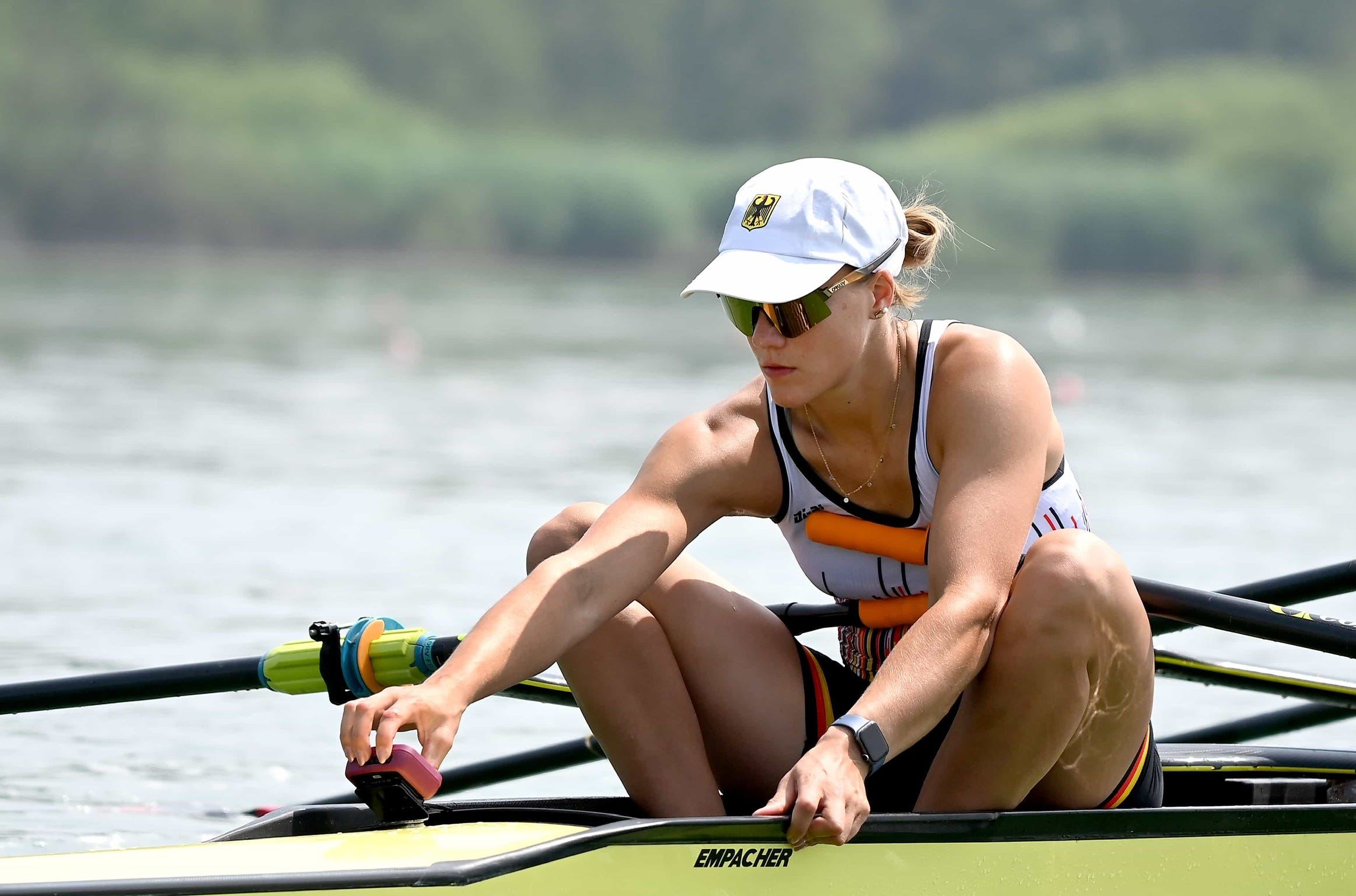
The strongest athletes are often the ones listening closely
Elite sport celebrates pushing limits, and rightly so: records are broken because athletes dare to go beyond what once looked impossible. But what happens when the culture only encourages you to push, and not to listen?
When we talk about the “No Pain, No Gain” mentality, Lisa’s answer is refreshingly honest:
“I don’t really have a framework to know when to push and when not” she says. “Gut feeling is what has helped me the most to trust my body’s signals and understand when it was time to stop.”
She describes herself as highly sensitive and deeply aware of her body, which enables her to notice and listen to shifts early: soreness, fatigue, illness, imbalance. That awareness became one of her greatest performance tools:
“If you have a gut feeling that something might be too much… definitely take a step back and listen to your body.”
However, what now sounds simple required Lisa to overcome years of conditioning in which her coaches rewarded pushing through exhaustion and competing while sick rather than developing body literacy.
Another way some sport cultures implicitly teach young athletes to disconnect from themselves is by framing self-neglect as ambition and proof of commitment … as if pushing through pain, overriding exhaustion, and ignoring what your system is asking for were the ultimate signs that you “really want it” and that you have “what it takes.” But is neglecting yourself truly proof of strength and determination? Or is it the harder choice the opposite? To choose self-respect. To fuel, recover and listen. To perform at your best because of your body, not despite it?
“I’ve pushed limits too far a lot and been forced to show up despite feeling sick, with awful consequences. But I’ve also listened to my body a lot. Through experience you learn when it might be too much. Sometimes taking the day off - or not doing the last set - actually helps you perform better the next day.”
After experiencing different coaching styles, both in the US and in Germany, Lisa realised that her self-trust did not emerge automatically, but grew when she was allowed to speak honestly without fear of judgement or dismissal. This happened once rest stopped being framed as failure and when coaches recognised that performance and recovery aren’t opposites, but integrated parts of providing their athletes with the conditions to reach success, without compromising their health and wellbeing.
Empathy as an infrastructure to performance optimisation and wellbeing
Lisa speaks thoughtfully about coaches. She has experienced support, but also witnessed her teammates struggle. She recognises that a coach can be demanding and still deeply caring, structured and still empathetic, tough and still human. It was thanks to coaches who trusted her when she said she was done, that she managed to lean even more into her gut feeling and find the strength to say ‘enough’ .
“Trust your body. You know your body best,” she says. “A coach can say, ‘You look strong.’ But they don’t know what your body feels like.”
That distinction matters especially for young athletes going through the changes of puberty, where their bodies become unfamiliar and the system is not structured to help them listen to and understand what their body signals mean. Even more so when the first type of pain they learn to push through is the pain of their period.
This is where Lisa reframes empathy in coaching as a tool to create mutual trust: empathy isn’t much about lowering standards, but more so making space for the athletes to speak their truth. And as Lisa’s sport achievements show, truth is a performance advantage.
When reflecting about the various coaching styles she experienced, Lisa also mentions her coach Dave O’Neill who still shapes the way she moves through rowing today. More than training plans or race strategy, her American coach taught her what leadership inside a team could feel like.
“He would always say attitude and effort,” Lisa recalls.
Simple words, but ones she still carries with her. He taught athletes to treat every training day with the same intention as championship day. And then, when championship day came, to trust the work and keep it simple: no panic, no reinvention, just showing up with consistency and trust in the process.
But what stayed with Lisa most was the team culture he built around that mindset. In a sport where internal competition can easily become isolating, he created an environment where athletes understood that individual growth and collective success were mutually reinforcing and absolutely necessary.
“You’re just a little part of the whole team,” she says, “but you can make the whole team so much better by how you show up.”
From Lisa that lesson became bigger than rowing, as it taught her accountability without ego, discipline without fear, and the proof that demanding excellence and leading with empathy are not opposite coaching styles, but often the same thing.
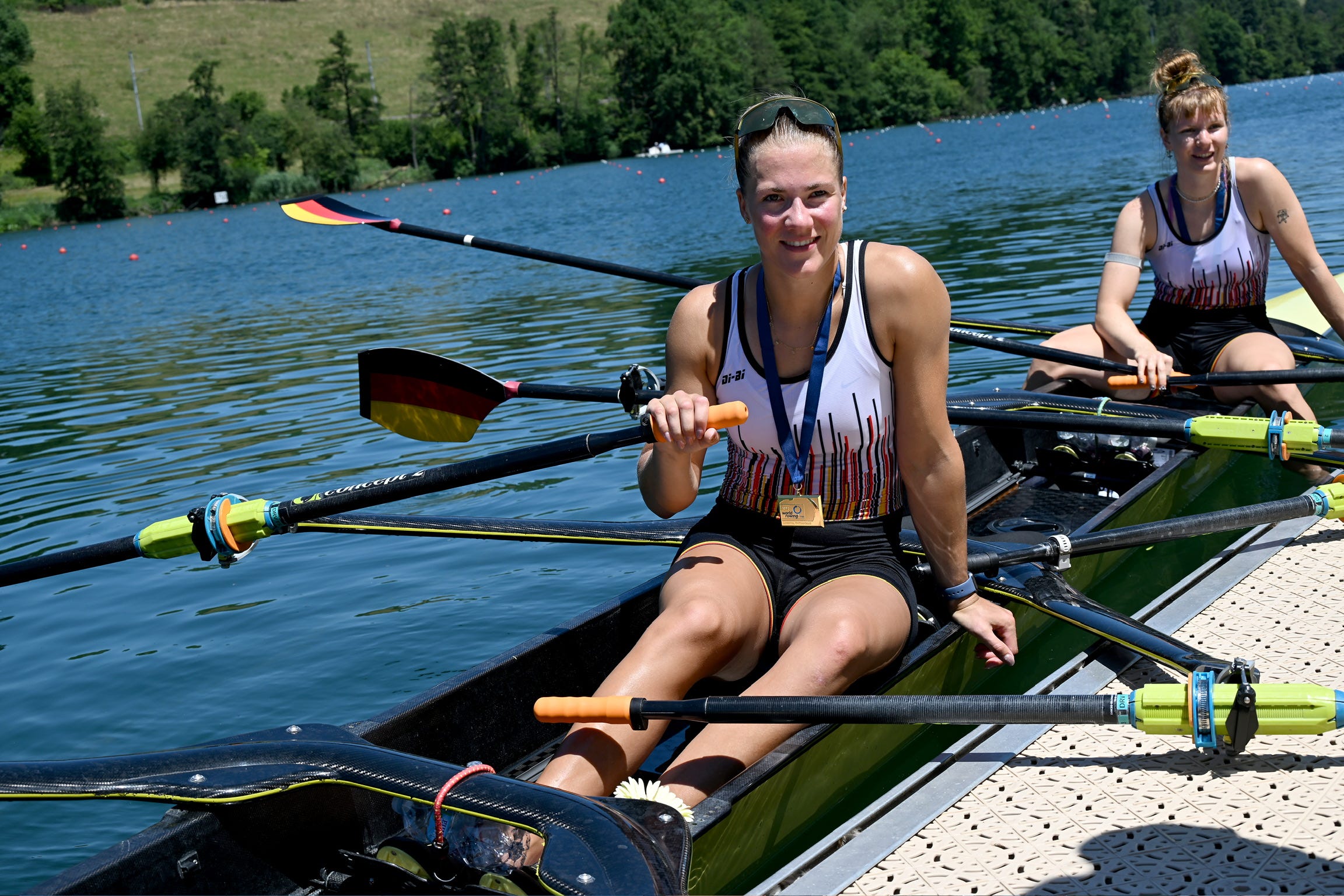
The turn
Lisa’s story is one of gradual reclaiming of trust in herself, of learning how to separate her body from the noise around it, of understanding that strength did not have to come at the expense of femininity. It is a story of recognising that listening closely to her body was not a sign of fragility, but part of what made her a stronger athlete in the first place.
That shift did not happen overnight, but through a series of ordinary moments of love, care and belonging: learning how to fuel herself without fear, discovering a few meals that felt grounding again after years of forcing nutrition into an exhausting task, feeling her body grow stronger and realising nothing had been lost in the process. If anything, Lisa became more herself: more grounded, more attuned to her needs, more capable of taking up space without apologising for it.
And maybe that is what feels most striking in Lisa’s experience: strength was never really the hard part. Her body was capable of adapting, building power, carrying more, becoming stronger. The harder part was undoing everything around that strength, such as the years of messaging that told women that visible power should come with caution, that ambition should stay digestible, that taking up space might come with consequences. The challenge was never simply performance. It was learning to believe that becoming stronger did not mean becoming less feminine, less worthy or less accepted.
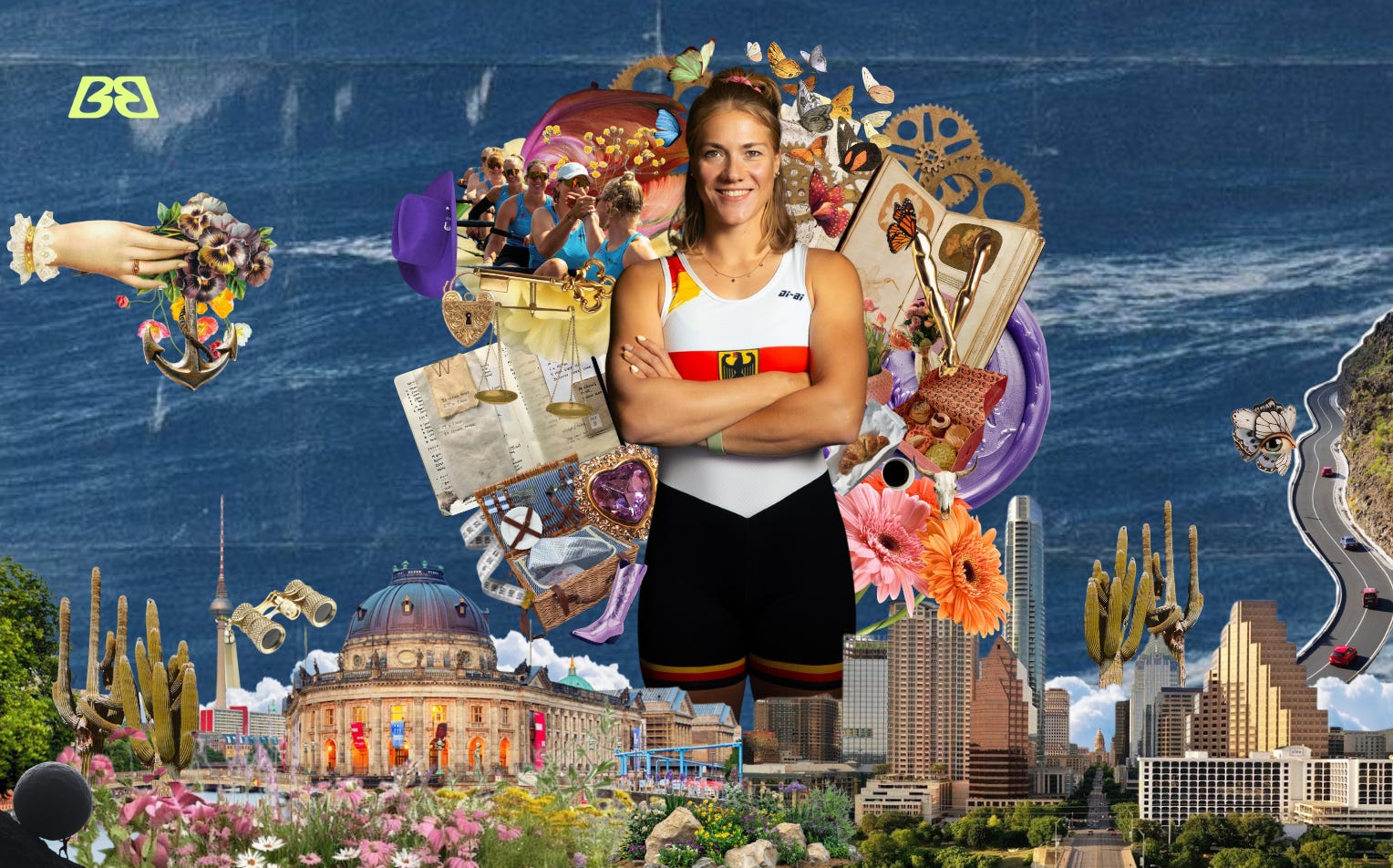
The tension Lisa overcame, this push and pull between performance and appearance, between what the body needs and what culture rewards, still shapes the experience of so many girls in sport. They are told to train harder, eat enough, build muscle, push limits, trust the process. But at the same time, many are still absorbing a very different message:
Don’t become “too much”.
Don’t look too muscular.
Don’t take up too much space.
Don’t be difficult.
Don’t make your needs louder than your performance.
That contradiction follows female athletes long before elite competition and often long after it. It shapes how girls move through puberty, how they understand recovery, how they relate to food, how they speak to coaches, how they define confidence and even how they see themselves in the mirror. It shapes who stays in sport and who quietly walks away from it.
And that is why Lisa’s message to the next generation is so needed:
Don’t hold back on being strong because someone said it does not look feminine.
Women in sport deserve systems that meet them where they are and how they are. Coaches who understand that empathy and excellence can coexist. Education that teaches girls what their changing bodies need instead of leaving them to guess. Resources that recognise women’s sport as worthy of investment, visibility and support. And a culture that stops treating female strength like something that needs to be softened, contained or justified.
Strength is not the opposite of femininity, and the next generation of female athletes should never have to choose between becoming powerful and fitting in.
We are beyond grateful for Lisa’s strength, vulnerability, and courage in speaking out and highlighting critical topics that have long been under-addressed in the sporting world.
Make sure to support her personal and professional journey @Lisa_Gutfleisch
Very beautifully written. Thank you for capturing this story so well and for delivering a powerful message. 💪🏼